
Equipment · Lens accessory
Turns our 70-200mm into a 400mm in about ten seconds.
A teleconverter sits between the camera and the lens and doubles the focal length. Our 70-200mm becomes a 140-400mm. It is a small piece of glass that solves a problem which otherwise requires an enormous and enormously expensive lens.
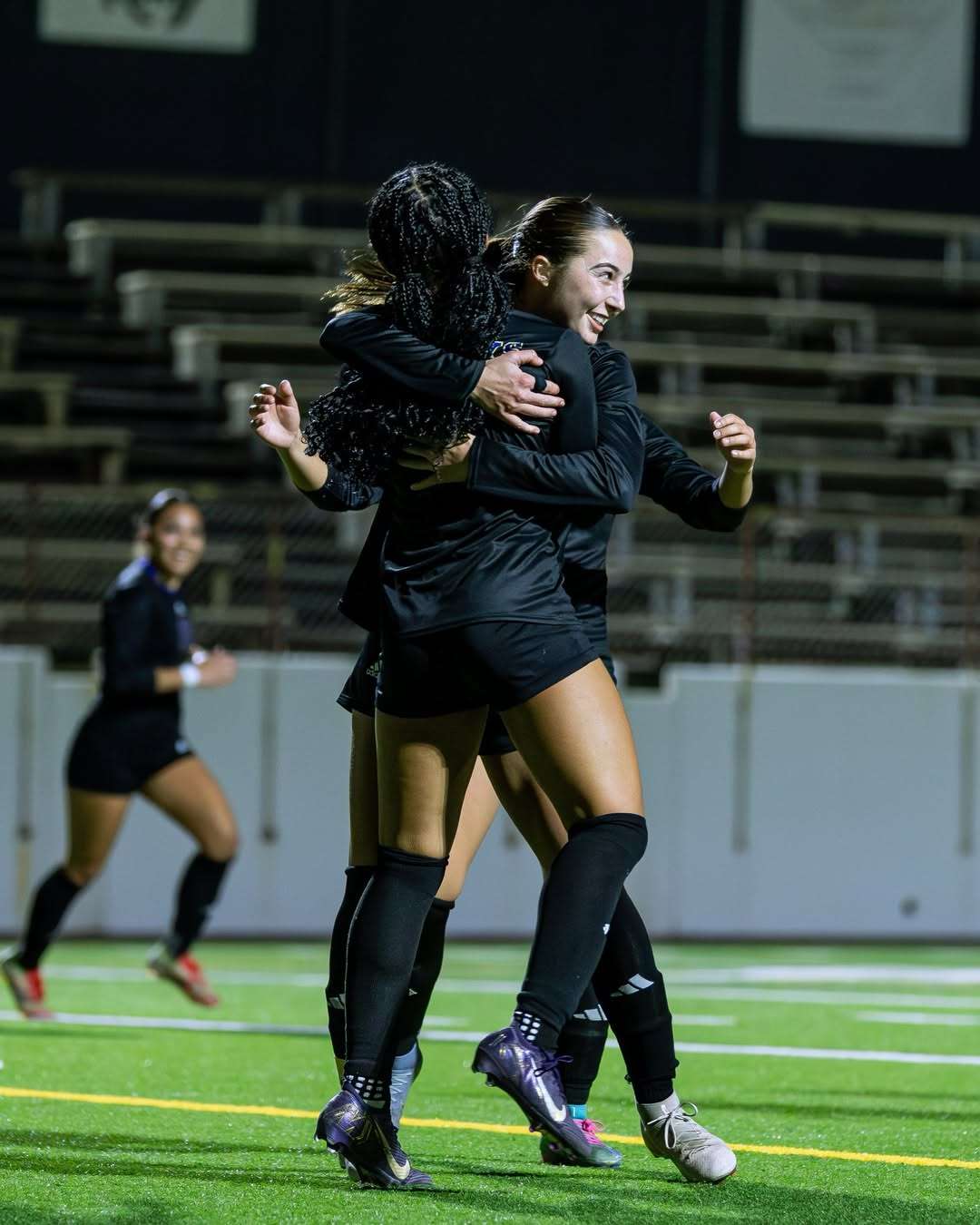
Two hundred millimetres covers the near half of a soccer, lacrosse or football field comfortably. It does not reach the far touchline. At 400mm the whole field is available from one position, which matters because photographers are not free to roam during play. This is the difference between covering a game and covering the half of the game that happened nearby. See sports photography.
Some events keep spectators and photographers at a fixed distance that cannot be negotiated. Reach is the only variable available.
At four hundred millimetres a photographer can be far enough away to be entirely irrelevant to what is happening. For a candid frame of a nervous parent, or a moment between two people who would stop if they noticed, distance is the whole technique.
A teleconverter costs light. Our f/2.8 telephoto becomes an f/5.6 lens with the converter fitted — two stops darker. In bright daylight this is irrelevant. Under floodlights, in a gym, or at dusk it is a real constraint, and the right decision is often to remove the converter and crop the file instead, which is where the resolution of our bodies earns its keep.
A dedicated 400mm f/2.8 is superb, extremely heavy and extremely expensive, and it does exactly one thing. The converter fits in a pocket, turns a lens we are already carrying into a long lens in about ten seconds, and comes off again just as fast when the light drops. For the mix of work we actually do, that flexibility is the better answer.
If a night game is under weak floodlights, adding a teleconverter will produce reach and unusable images. In that situation we shoot at 200mm and crop, and we would rather explain that in advance than hand over a gallery of dark, soft photographs of the far touchline.
Related: our full equipment list, 70-200mm f/2.8 GM II, Sony Alpha 1 II, sports photography, school photography.
Covering a field sport or an event with a fixed photographer position? Tell us the venue.
Check availability