
Equipment · Aerial
Two aircraft, three cameras each, ProRes recording, and the airspace paperwork handled.
We fly two DJI Mavic 3 Pro Cine aircraft. The Cine designation matters: it records in Apple ProRes to an internal solid-state drive rather than only to a memory card, which is the difference between aerial footage that grades like the rest of a film and aerial footage that visibly does not match.
The aircraft carries a main Four Thirds Hasselblad camera plus two additional telephoto cameras. That is not a specification for its own sake — it changes what a single flight can produce.
The main camera is what people picture when they think of drone footage: the property, the venue, the coastline, the site, shown whole.
The longer cameras produce a completely different look — a compressed, cinematic frame that does not read as drone footage at all. It is how you get a slow, flat, moving shot of a building or a golf hole that feels like it was taken from a helicopter rather than from a small aircraft fifty feet away. Being able to switch between them mid-flight means one battery produces several genuinely different shots.
Aerials establish what ground photographs cannot: the plot, the boundaries, the roof, the relationship to the water or the road. See aerial property photography and real estate photography.
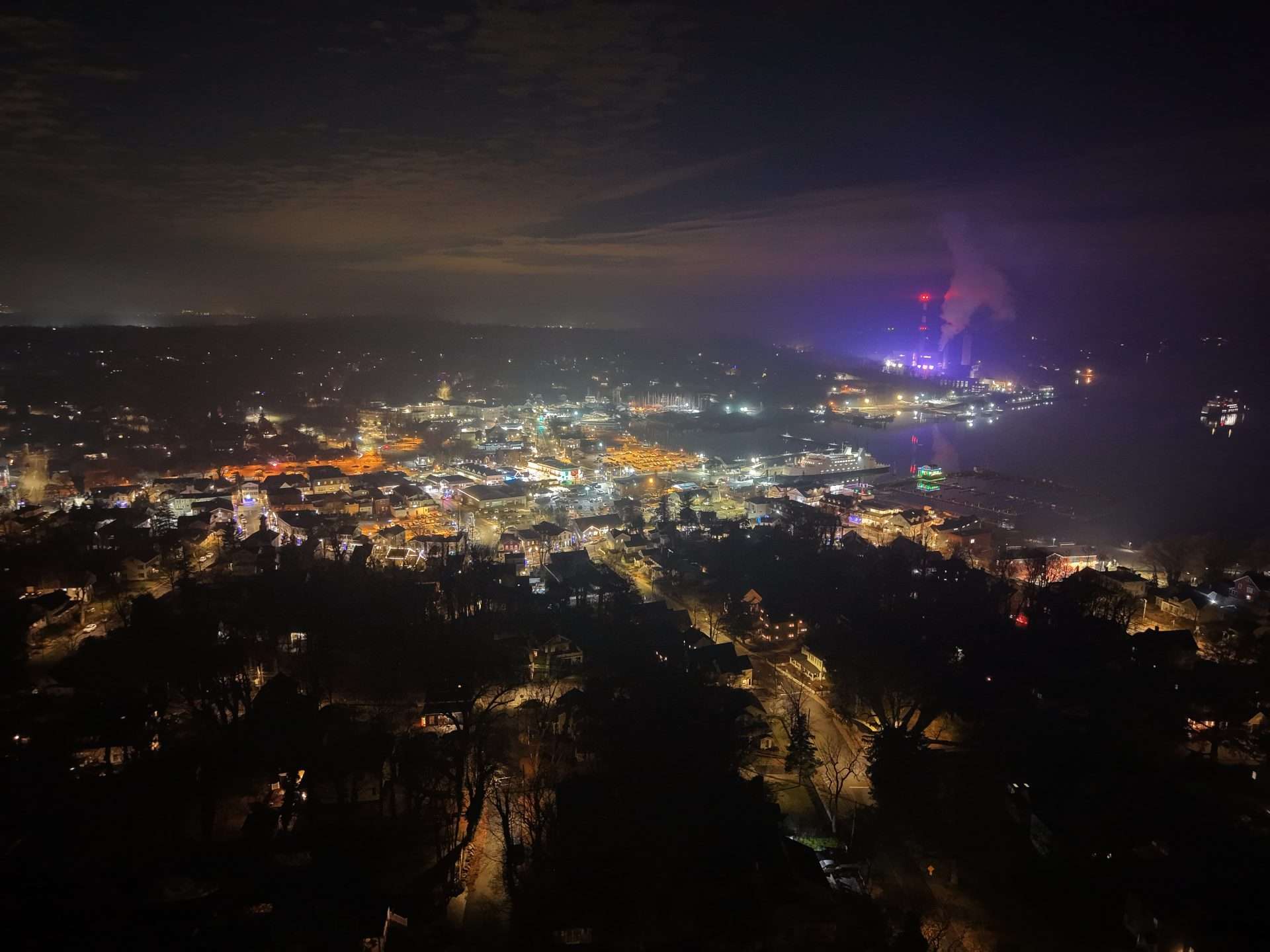
A single aerial frame communicates the scale and setting of a venue better than any number of interior photographs.
Repeatable overhead documentation of a site as it changes, plus mapping and site surveys.
Close visual inspection of a roof without a ladder, scaffold or anybody going up there.
Commercial drone work in the United States requires an FAA-certificated remote pilot, and Long Island is dense with controlled airspace — between JFK, LaGuardia, Republic, MacArthur and a number of smaller fields, a great many attractive locations sit inside airspace that requires authorisation before a legal flight can happen. We handle that as part of the job. We have written up how it works in Long Island drone photography laws and FAA rules.
Redundancy, and continuity. A second aircraft means a battery, a signal problem or a failure does not end the shoot, and on larger jobs it means aerial coverage can continue while the first is on charge.
Drones are grounded by wind, rain and low cloud, and no amount of planning changes that. We build aerial work into a flexible slot wherever possible, and we will move a flight rather than fly in conditions that produce unstable footage — or, worse, an unsafe flight.
Related: our full equipment list, drone photography, aerial property photography, drone mapping, drone laws on Long Island.
Need aerial coverage of a property, venue or site? Send us the location and we will check the airspace.
Check availability