
Proposals · Long Island
Picking the location, timing the light, staying hidden — and what to do the moment she says yes.
A proposal lasts about ninety seconds. The walk over, the pause, the drop to one knee, the answer — and then it is over, and the only thing left is what people remember and whatever happened to be photographed. That is the entire case for hiring someone: not to stage it, but to make sure the ninety seconds survive.
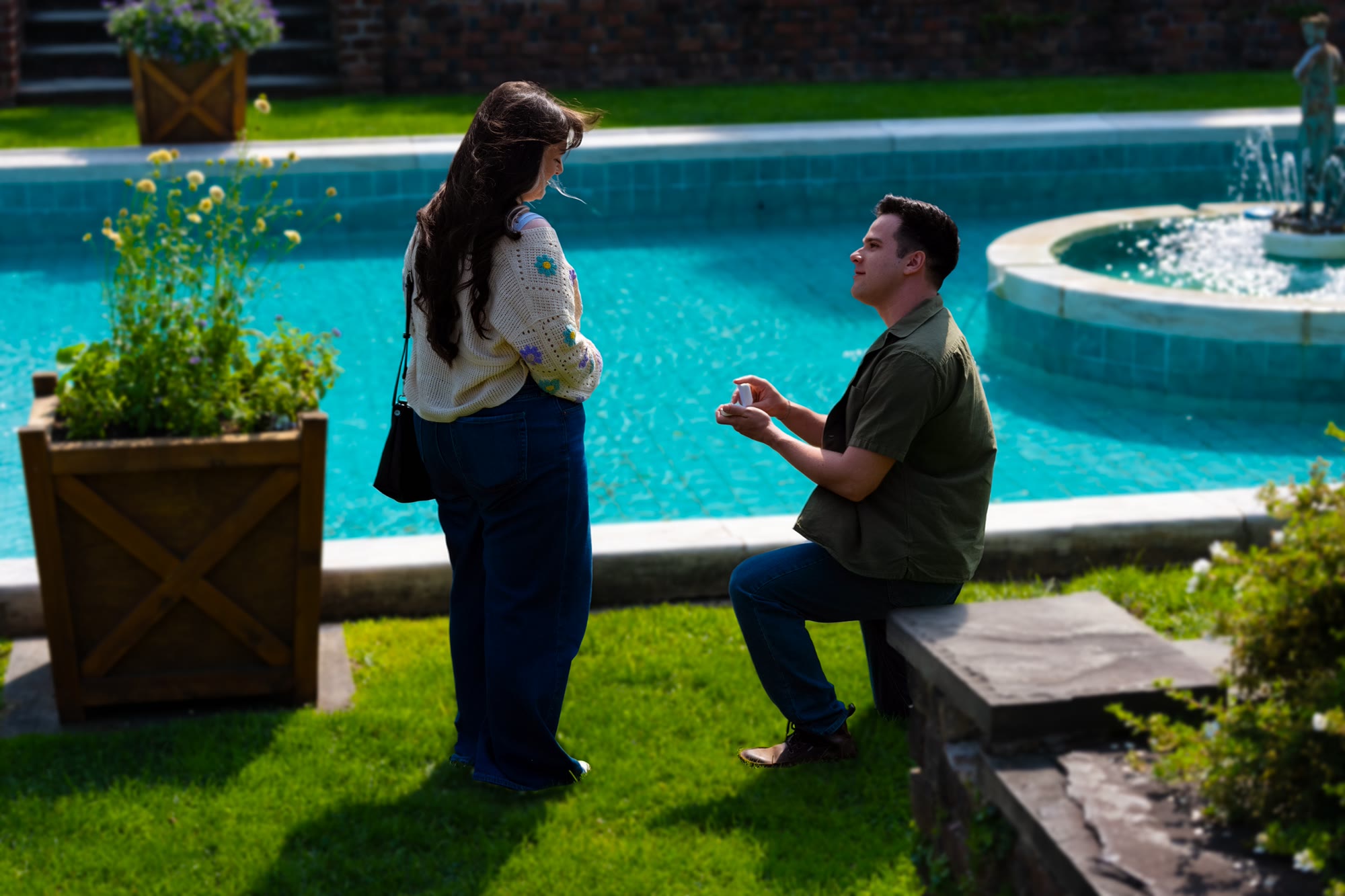
Long Island gives you an unusual range for a small area. Within about an hour you can go from a formal walled garden to an ocean beach to a working harbour, and each one produces a completely different photograph. What matters is picking the one that means something to the two of you — a proposal at a place you already love beats a prettier place you have never been.
Formal gardens are the most reliable choice on the Island, and it is not close. They give structure — fountains, gates, hedged walkways, stone steps — which means a photographer has somewhere to hide and something to frame you against. They also tend to stay attractive across more of the year than a beach does. Grounds like Old Westbury Gardens and Oheka Castle are the sort of setting this works best in. Check access rules first — several estates charge admission, close seasonally, or restrict professional photography entirely.
The classic. Worth knowing that the shoreline you choose changes the light completely: the North Shore faces Long Island Sound so the sun sets over the water, while the South Shore gets the better sunrise. If you want the sun going down behind you as you kneel, you want a north-facing spot. Montauk is the postcard version and busy for good reason; quieter stretches further west are easier to control and far easier to park at.
An underrated option, especially off-season. Greenport packs a working harbour, boats, and walkable painted streets into a few blocks, which means you can propose on the water and be shooting portraits somewhere completely different two minutes later without anyone getting back in a car.
The backyard. The bench where you had your first date. The spot on the beach you drive to every summer. These almost never photograph as dramatically, and they are almost always the ones people are gladdest to have.
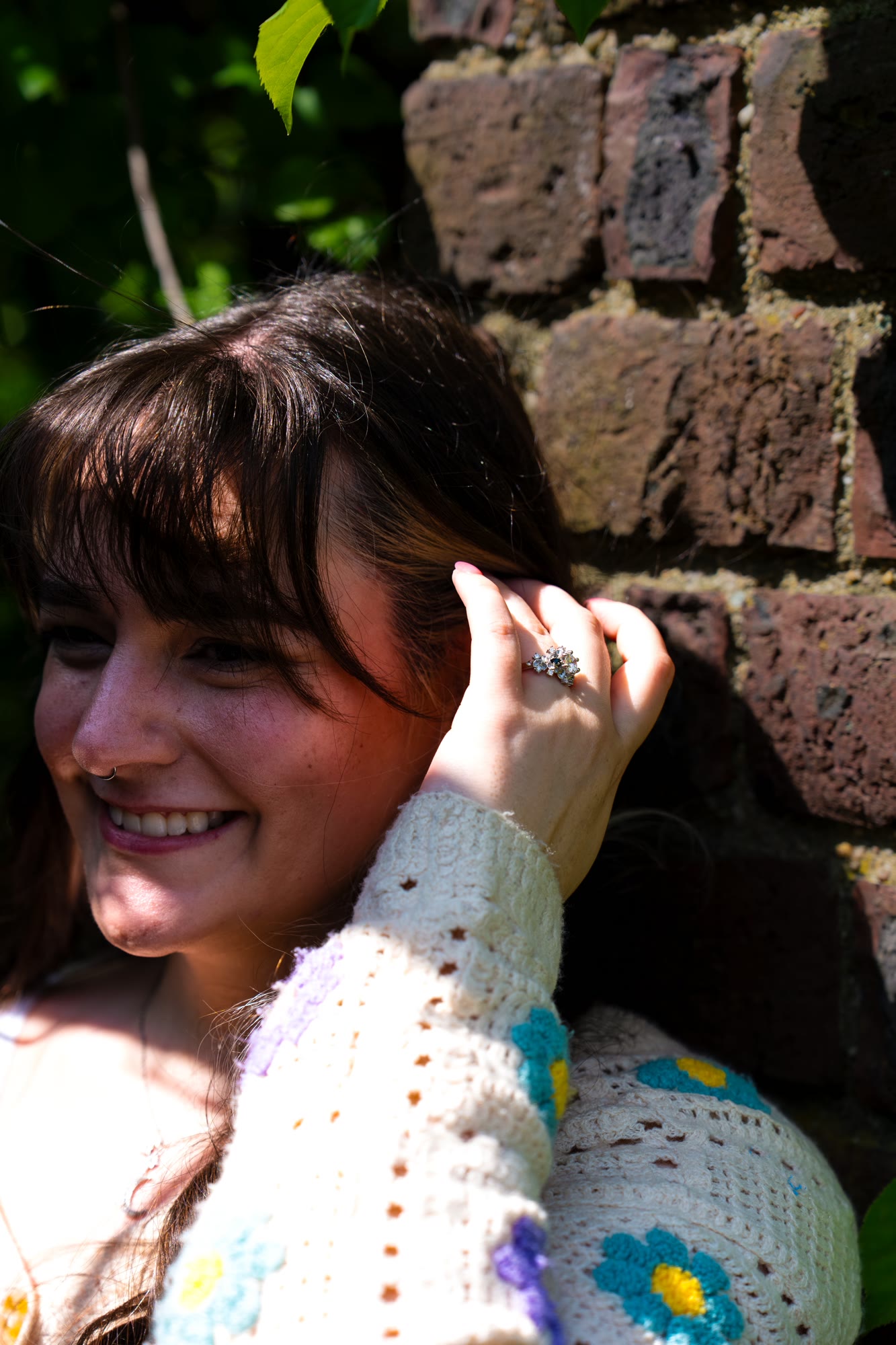
The best hour for a proposal outdoors is the last one before sunset, and it is not a close call. The light is low, warm and forgiving, and it flatters everyone. The hour after sunrise is a close second with the enormous advantage that nowhere is crowded.
The mistake worth avoiding is the middle of a summer afternoon. The sun is directly overhead, it carves shadows under the eyes, and both of you will be squinting in every single frame. If midday is your only option, we look for open shade rather than fighting it.
Sunset moves by hours across the year here — an evening proposal in June and one in October are completely different appointments. We plan backwards from the actual sunset time for your date rather than picking a round number.
The part people worry about most is the part that is genuinely routine. A surprise proposal shoot has three pieces:
Two things reliably go wrong, and both are avoidable. The first is proposing with your back to the camera, which is fixed by agreeing which way you will face. The second is rushing — the pause before you kneel is worth an extra beat, and it is usually the strongest photograph of the sequence.
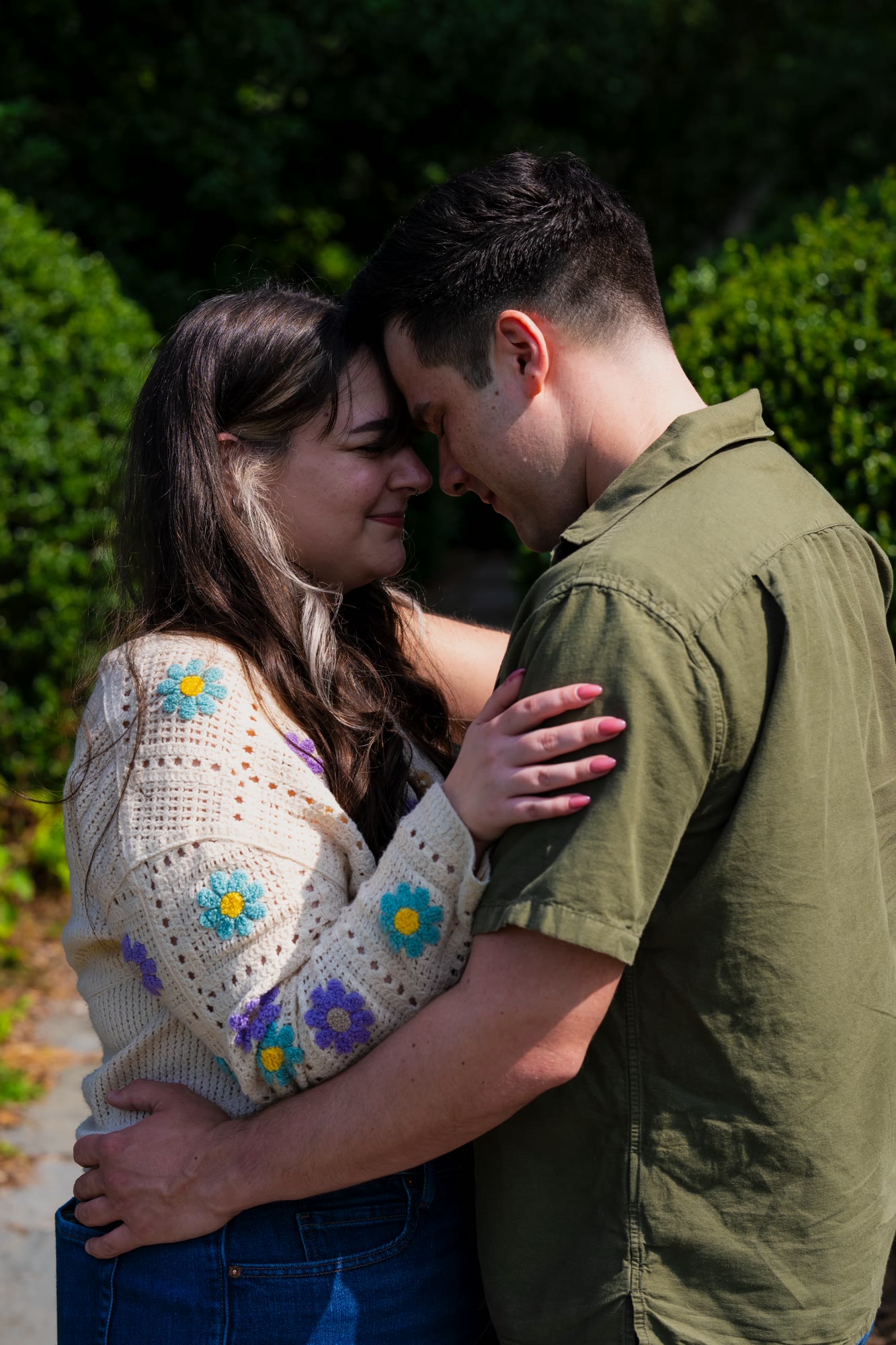
This is the half most people forget to plan, and it is where most of the good photographs come from. You are both flooded with adrenaline, neither of you is self-conscious, and nobody needs to be told how to look happy. It is the easiest portrait session anyone will ever shoot.
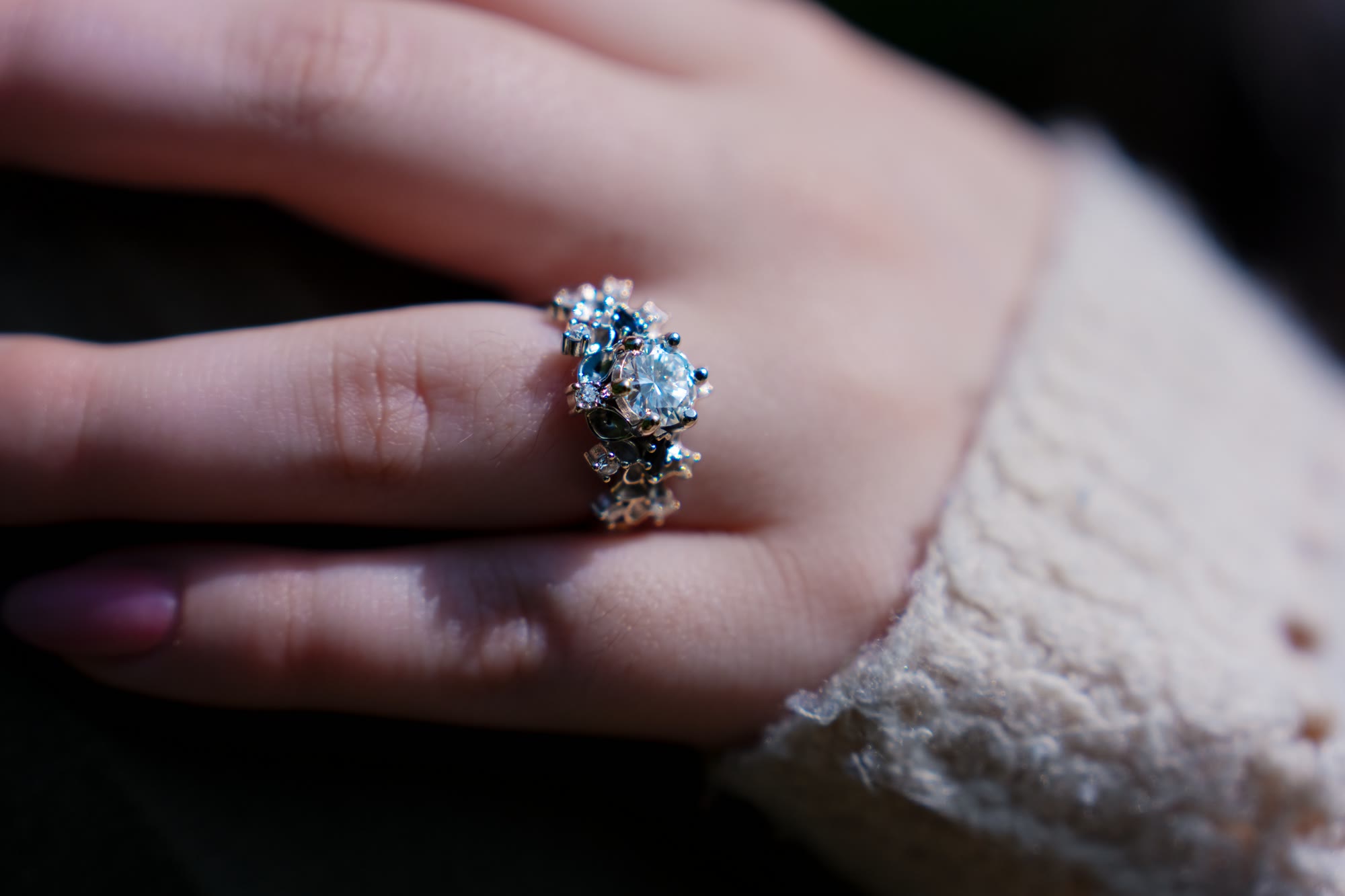
A workable shape for the twenty minutes afterwards: a few minutes to just be, then ring and hand detail while the light is still there, then a short walk with some frames along the way. If family or friends are hidden nearby, bring them in at the end — those group shots are the ones that end up framed.
It is also worth deciding in advance whether you want the news kept quiet for a day. We can hold delivery and send a small preview set first so you control when and how people find out.
Worth sorting before the date rather than on it. Many Long Island parks, beaches and gardens require a permit for professional photography, and in season a number of town beaches restrict parking to residents — which catches out couples travelling from elsewhere on the Island. Private estates set their own rules and some do not allow it at all.
None of this is difficult, it just needs doing in advance. We check the specific location and handle the permission, because the one genuinely bad outcome is a couple arriving dressed for the moment at a place where it cannot legally happen.
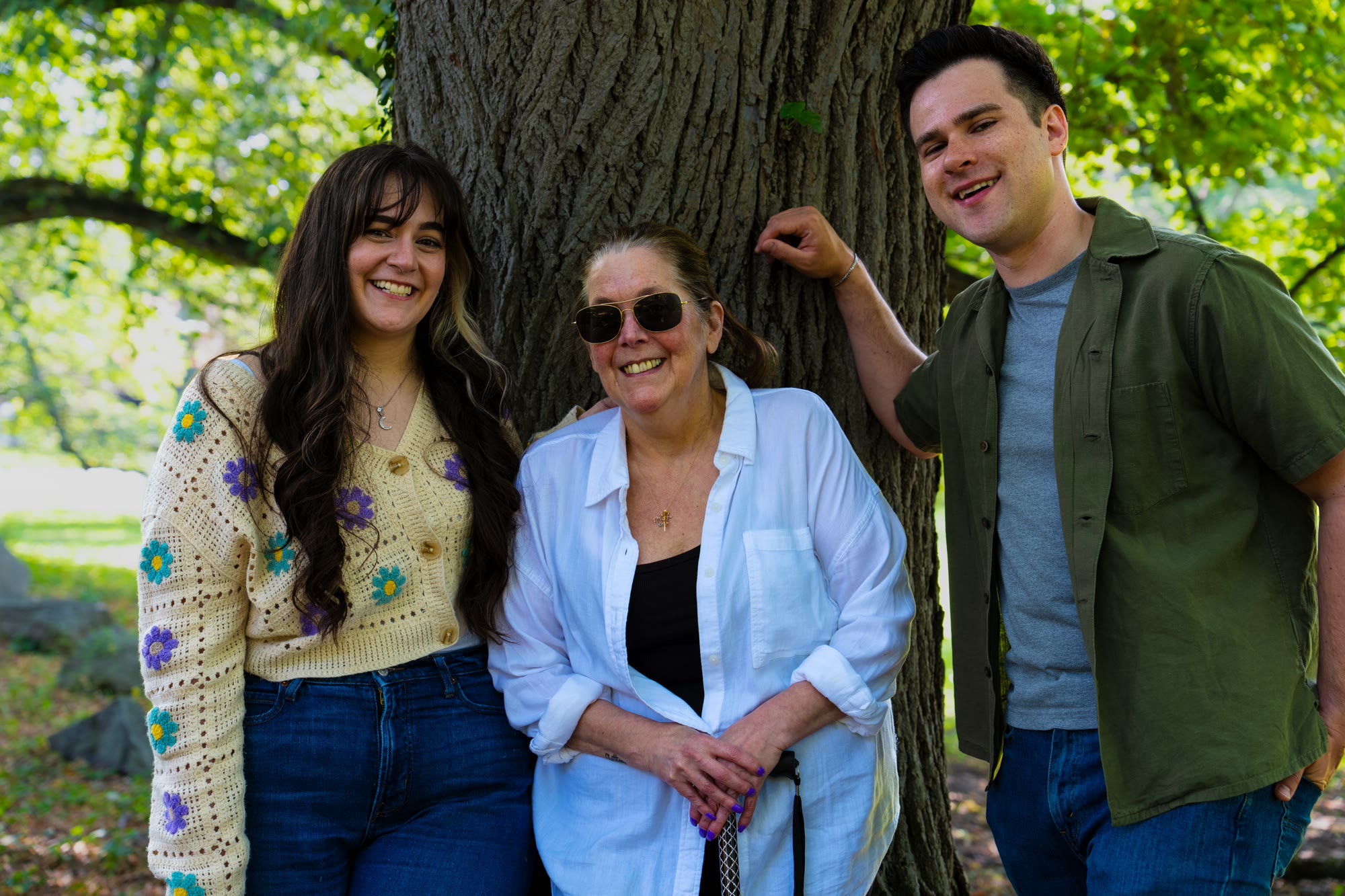
Planning something? Tell us the date, roughly where, and how you want it to go — we will handle the positioning, the permissions and the light.
Plan your proposalMore on how we cover these: surprise proposal photography and engagement sessions. If a wedding is next, the Long Island venue guides are the place to start.